
Understanding the Leader and the System Shaping Performance Under Pressure
Senior leaders operate in environments shaped by complexity, pressure, and consequence.
Performance can weaken even when the strategy is sound, the talent is strong, and the effort is real. That usually happens because the problem is not sitting in one place.
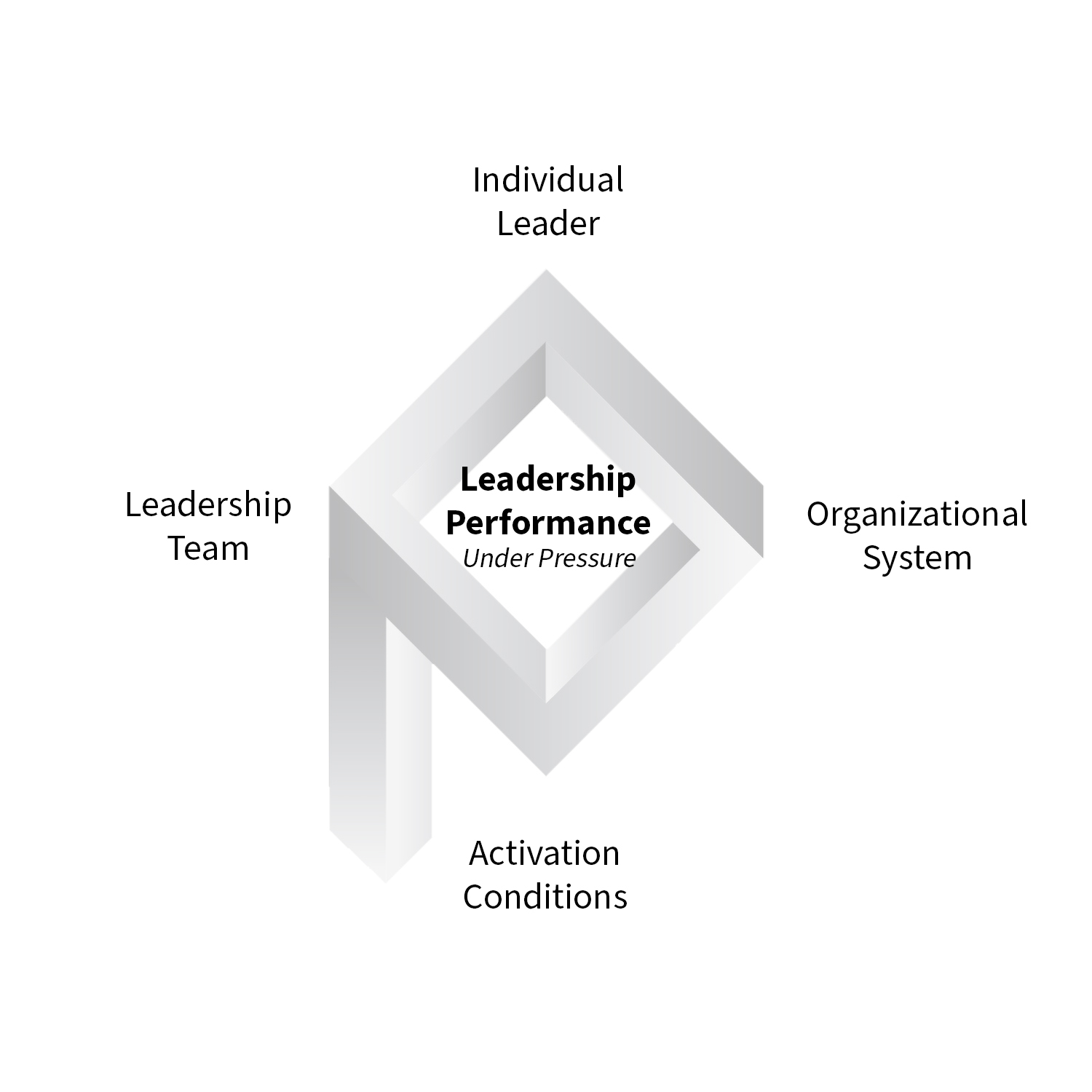
Leadership performance is shaped by the interaction of the individual leader, the leadership team, the broader organizational system, and the conditions required to create movement.
The Dual-Lens Leadership Performance Framework provides a practical way to understand where leadership performance is breaking down and what must be aligned to restore traction.

Core Principle
Performance deteriorates when leadership behavior, team dynamics, organizational conditions, and activation forces become misaligned.
Sustained performance requires alignment across four interconnected layers:
- the individual leader
- the leadership team
- the organizational system
- the activation conditions that create movement
The framework helps make that alignment — or misalignment — visible.
The value of the framework is not complexity. Its value is discipline.
It helps leaders avoid treating symptoms as root causes.
Lens One: The Leadership System
Performance begins with how leaders and leadership teams operate under pressure.
Without self-awareness, leaders often repeat familiar patterns at the moments when better judgment is most needed.
Individual Leader
Focus areas may include:
- strengths and overused strengths
- derailers under pressure
- motives, values, and assumptions
- decision-making patterns
- influence and communication habits
- steadiness under strain
Leadership Team
Focus areas may include:
- alignment around priorities
- decision quality and decision rights
- trust and conflict quality
- enterprise versus functional orientation
- consistency of messaging
- accountability and follow-through
When leadership teams operate with clarity, candor, and cohesion, coordinated execution becomes more likely. When they do not, even strong individual leaders can contribute to fragmented execution.
Activation Conditions
Organizations often have capable leaders, reasonable plans, and strong intentions — yet important work still fails to gain traction.
This usually happens when activation conditions are weak.
Two conditions matter most:
Shared Urgency
A broadly felt understanding that something important must move and that delay carries risk. Without urgency, inertia prevails.
Leadership Cohesion
A leadership group that acts with enough shared understanding, consistency, and coordination to create movement.
Organizational System
Leadership always operates inside a broader context.
The organizational system includes the conditions that either support performance or quietly work against it.
- Strategy and Direction Are the mission, priorities, tradeoffs, and desired outcomes clear enough to guide decisions?
- Culture and Values What informal norms, beliefs, and unwritten rules shape how work actually gets done?
- Structure, Systems and Governance Are roles, decision rights, processes, metrics, and operating rhythms helping or slowing execution?
- Leadership Coordination Are leaders coordinating across boundaries with enough clarity, accountability, and consistency?
- Capacity and Climate Does the organization have the talent, resources, energy, and readiness required for the work being asked of it?
- Execution and Adaptation Is there enough discipline, follow-through, learning, and course correction to sustain progress?
Even highly capable leaders and teams will struggle if the organizational conditions around them are misaligned with what performance requires.
What the Framework Helps Diagnose
The framework helps identify issues such as:
- weakened leadership effectiveness
- leadership team misalignment
- unclear priorities or decision rights
- cultural norms that undermine execution
- stakeholder friction and role confusion
- burnout risk and reduced capacity
- execution drift or uneven follow-through
- change efforts that are active but not gaining traction
The point is not to label the problem more elegantly. The point is to see it more accurately.
Better diagnosis improves judgment. Better judgment improves alignment, influence, and execution.
How the Framework is Used
I use the framework across three connected levels of work:
- Executive Coaching
Helping individual leaders strengthen self-awareness, judgment, influence, steadiness, and effectiveness under pressure. - Leadership Team Coaching
Helping senior teams improve alignment, decision-making, trust, accountability, and coordinated execution. - Leadership Advisory and Organization Development
Helping leaders identify and address the broader cultural, structural, relational, and execution conditions affecting performance.
The framework is not a template imposed on every situation. It is a diagnostic lens for understanding where performance is being helped, hindered, or misdirected.

Guiding Philosophy
Strategy provides direction. Execution produces results. Activation creates movement.
Sustained performance requires all three — supported by leaders, teams, and organizational conditions aligned around what matters most.
When the leader, team, system, and activation conditions are misaligned, performance becomes harder than it needs to be.
When they are aligned, leaders have a clearer path to judgment, influence, execution, and sustained results.
If the issues you are facing involve leadership effectiveness, team alignment, or performance that has begun to lose traction, the first step is better diagnosis.
Let’s start a conversation.